What to do in Itacaré
The village takes an afternoon on foot. The rest lies south, along the BA-001, and needs a car.
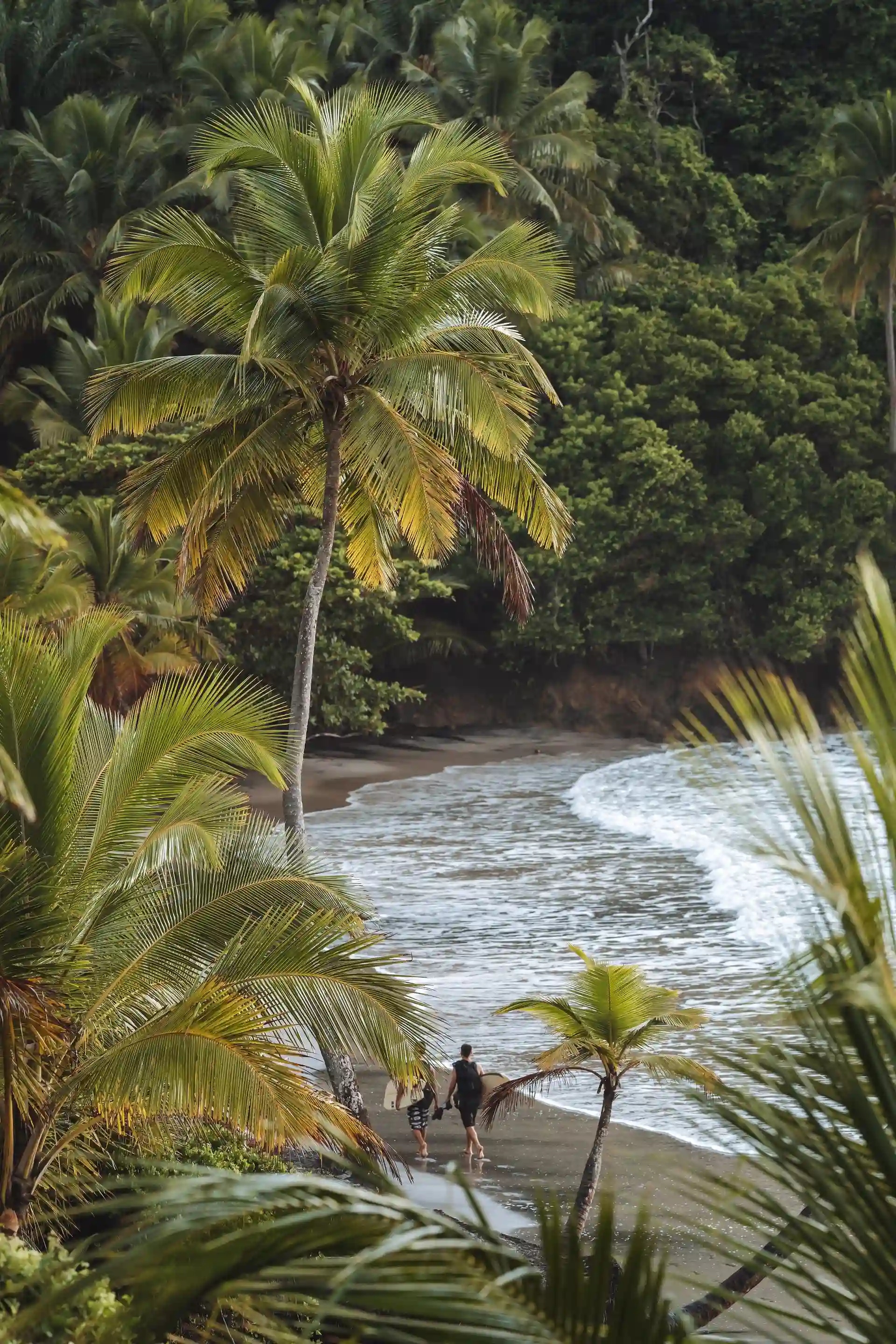
Itacaré has beaches, surf, waterfalls, a river and cocoa farms all within an hour’s drive of one another. The town beaches are linked by a seafront path and done on foot; the southern ones need a car and a walk down through the forest. The surf season runs from May to September, and September to November is the time for sun without the crowds.
The beaches, north to south
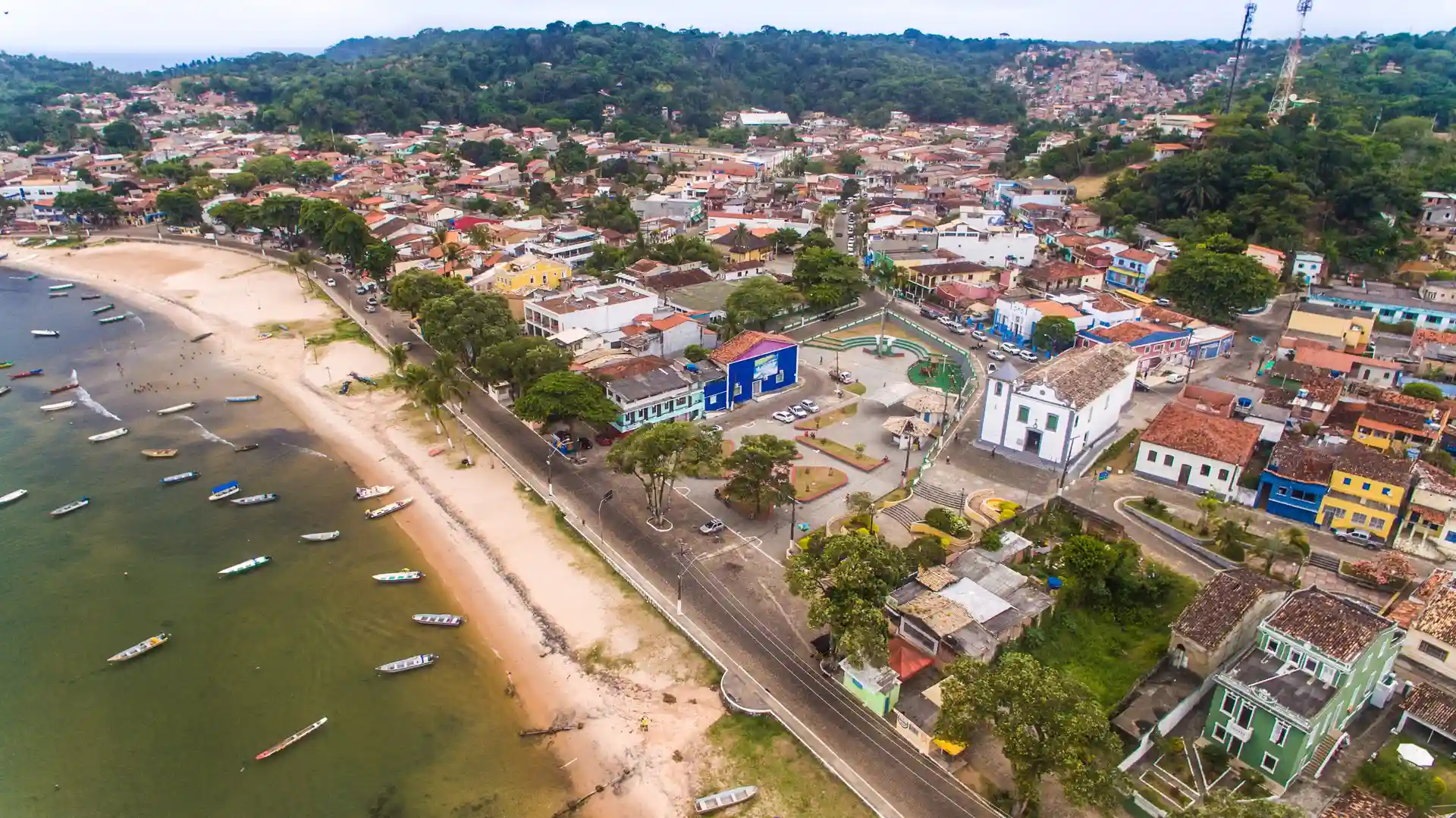
A seafront path runs from the centre through the first beaches in a row, and you can do all of them in an afternoon. South of the village, along the BA-001, the car stops at the road and the rest is on foot.
On foot from the centre
-
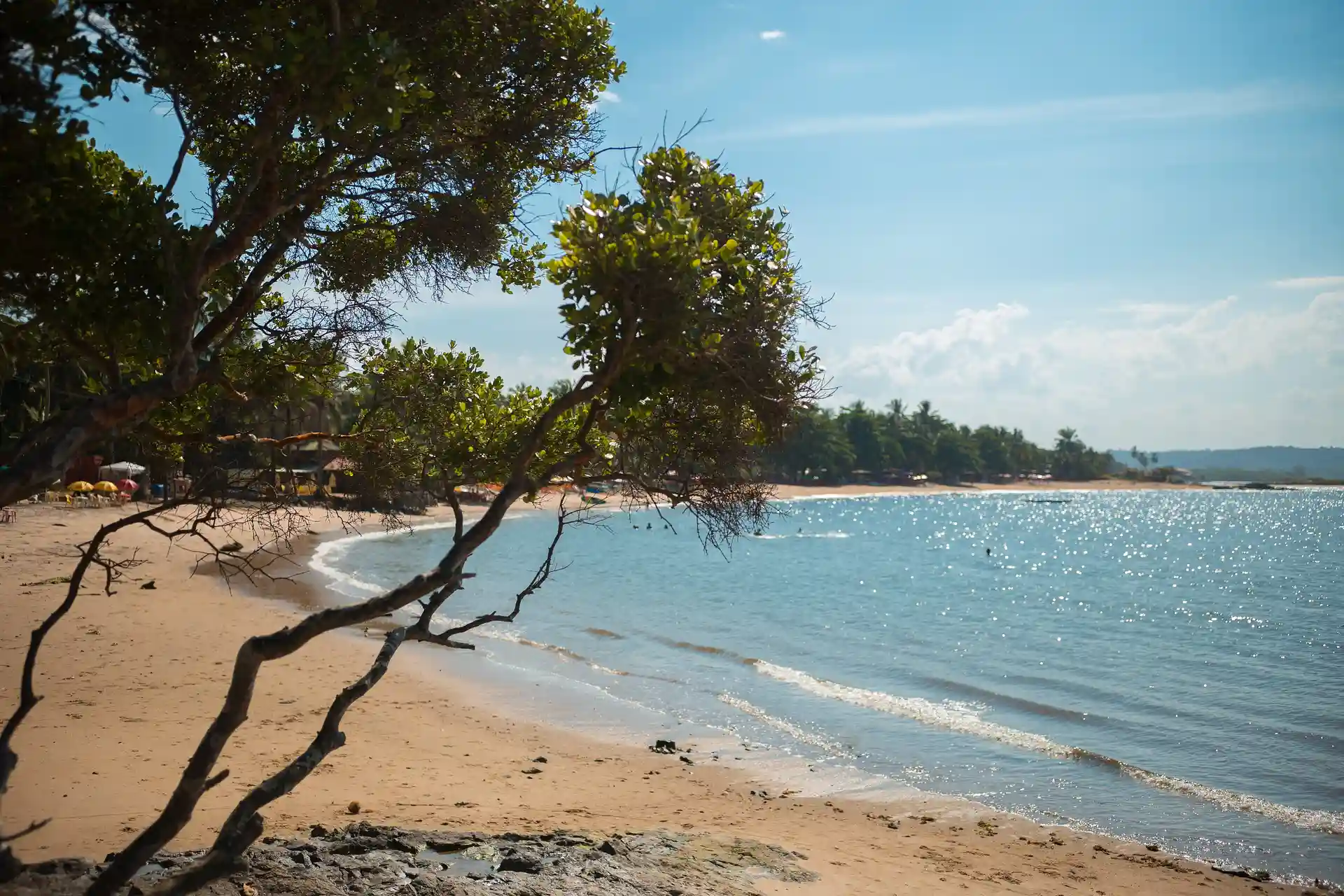
Photo: Márcio Filho/MTur Concha
A sheltered cove, 1.8 km from the hotel. The sea barely breaks: this is the beach for swimming with children, paddleboards and kayaks. A bar on the sand, and the sunset seen from Ponta do Xaréu, above it.
-
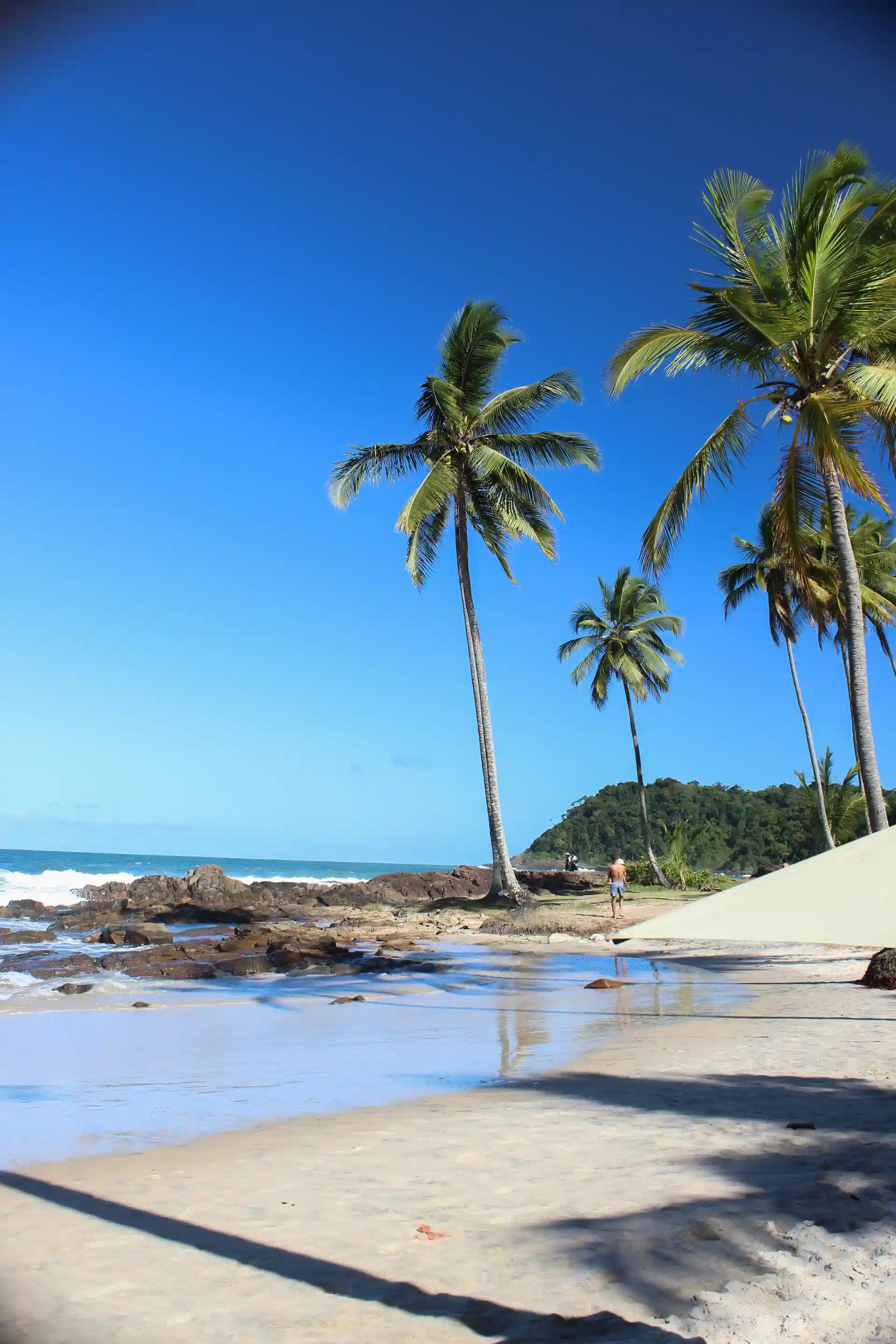
Photo: Matheus de Souza Silva, CC BY-SA 4.0 Resende
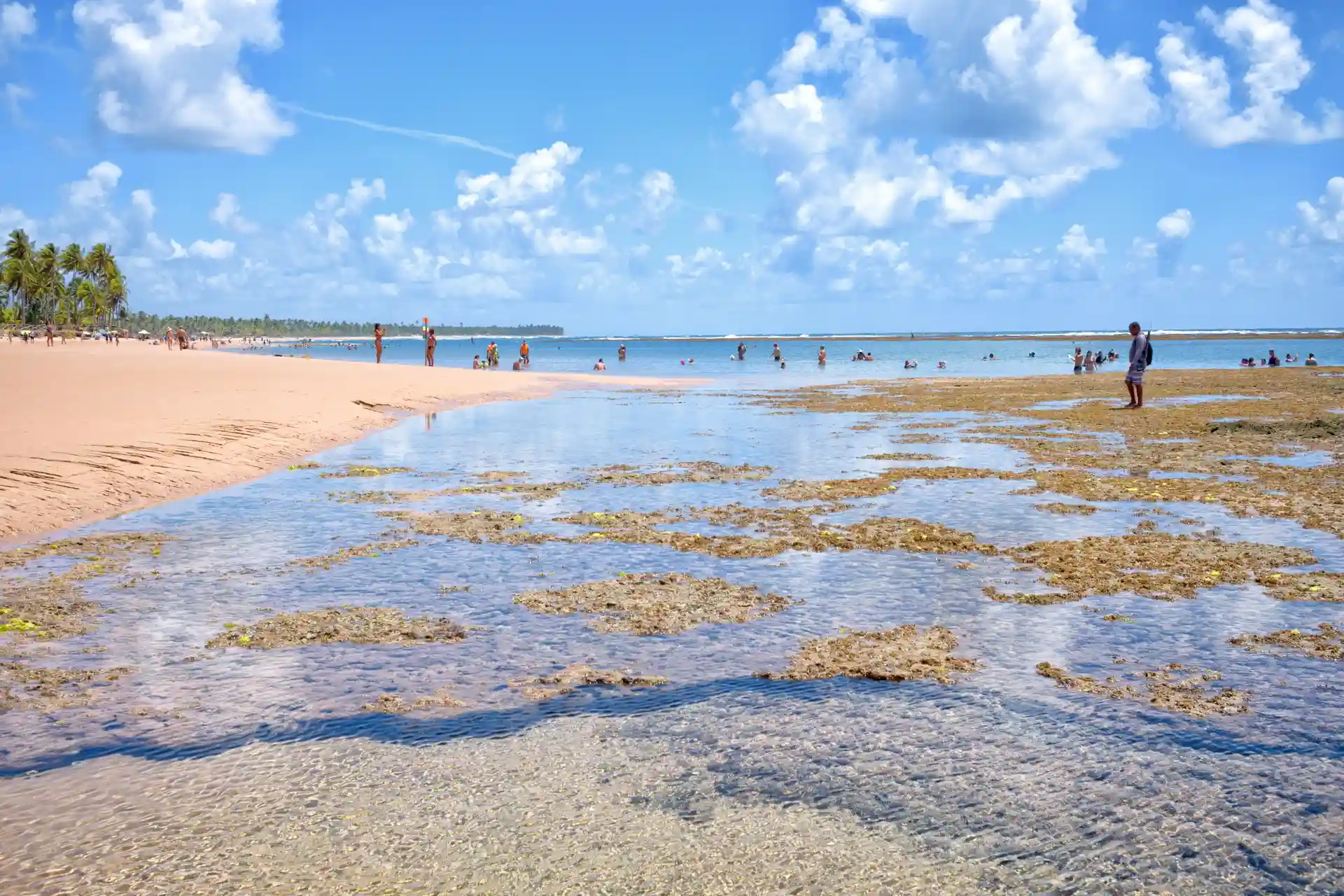
Small, with green slopes on both sides. At low tide, water is trapped between the rocks. Seven minutes from the hotel by car, like Tiririca and Costa.
-
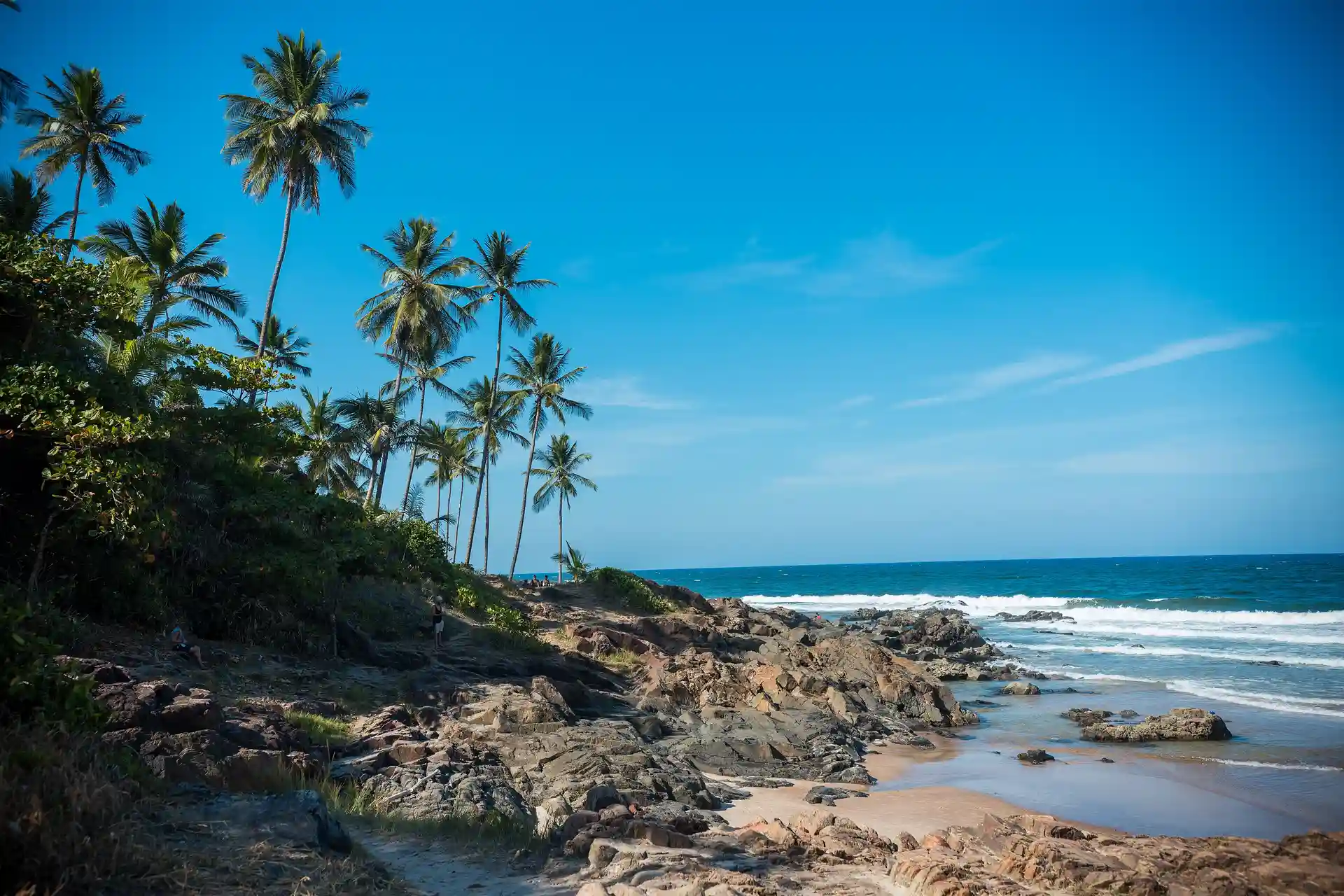
Photo: Márcio Filho/MTur Tiririca
The surf beach: schools, contests and the break that works almost all year. People on the sand all day.
-
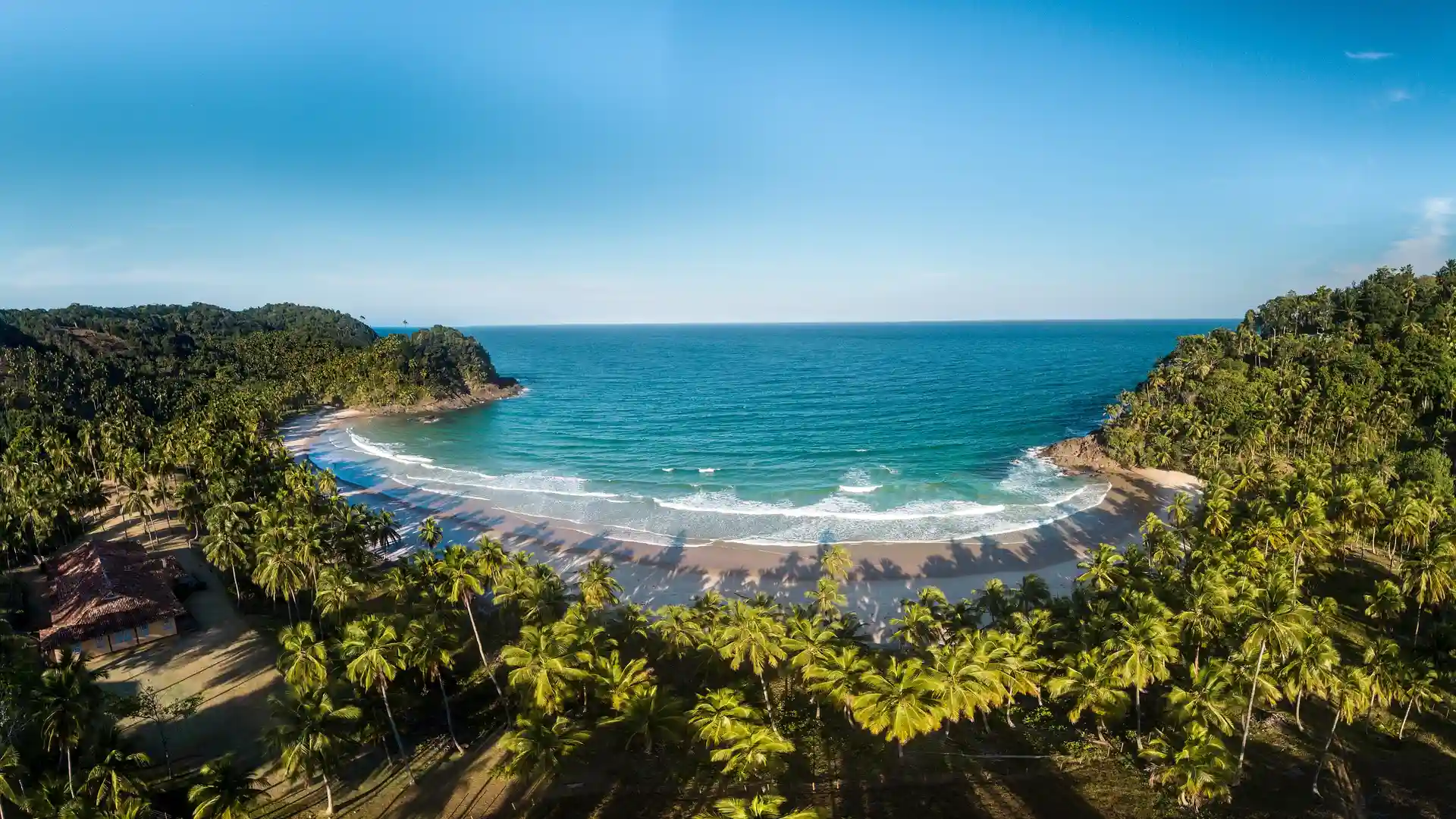
Photo: Márcio Filho/MTur Prainha
Half an hour’s walk through the forest from Ribeira. No facilities at all, and at the end of the path there is usually no one else. The wave is for experienced surfers.
- Ribeira The town beach where non-surfers really swim: more sheltered, with smaller waves. The path to Prainha starts here.
- Costa Beside Tiririca, close to the hollowest right-hander.
- Coroinha The central beach, where the fishing boats are, five minutes from the hotel by car. You go there to catch a boat.
By car, south on the BA-001
-
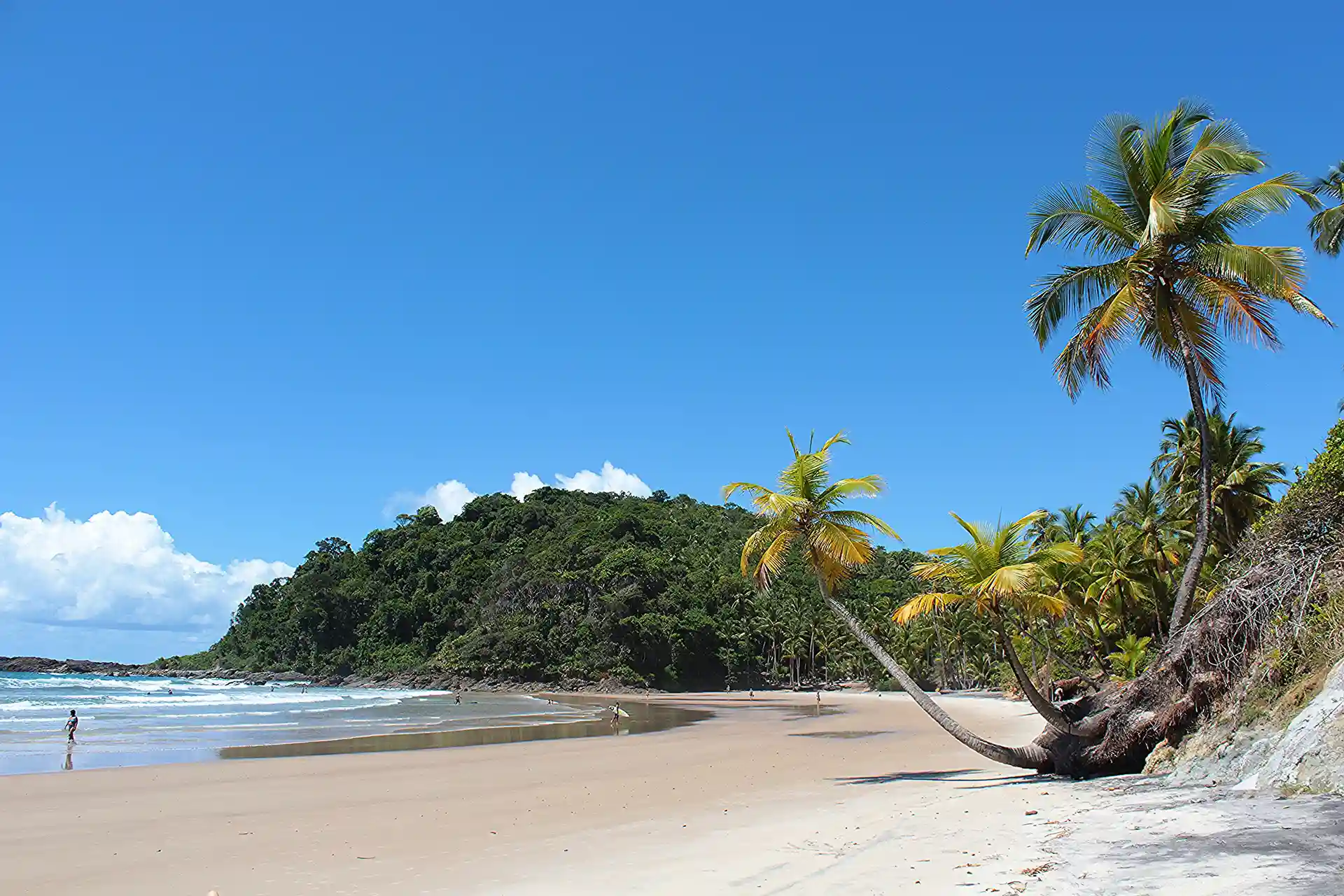
Photo: Marinelson Almeida, CC BY 2.0 Engenhoca
About twenty minutes’ easy walk from the road. A half-closed bay, a long and easy wave, a kiosk with food. At low tide, water is trapped in the rocks.
-
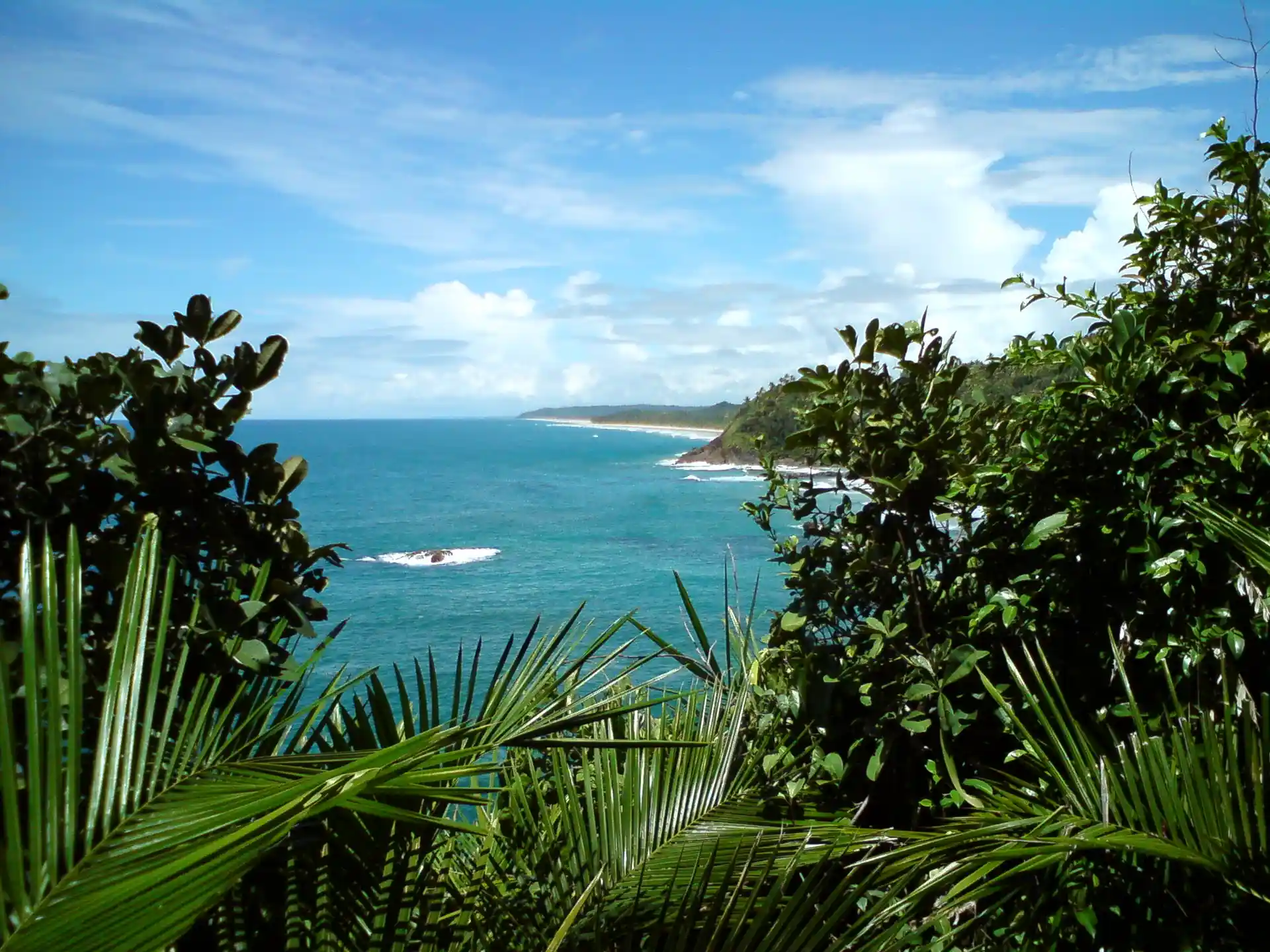
Photo: Maria, CC BY-SA 3.0 Havaizinho
On the same path as Engenhoca and Camboinha, with the open bay in front. Good for swimming and surfing, and almost always empty.
-
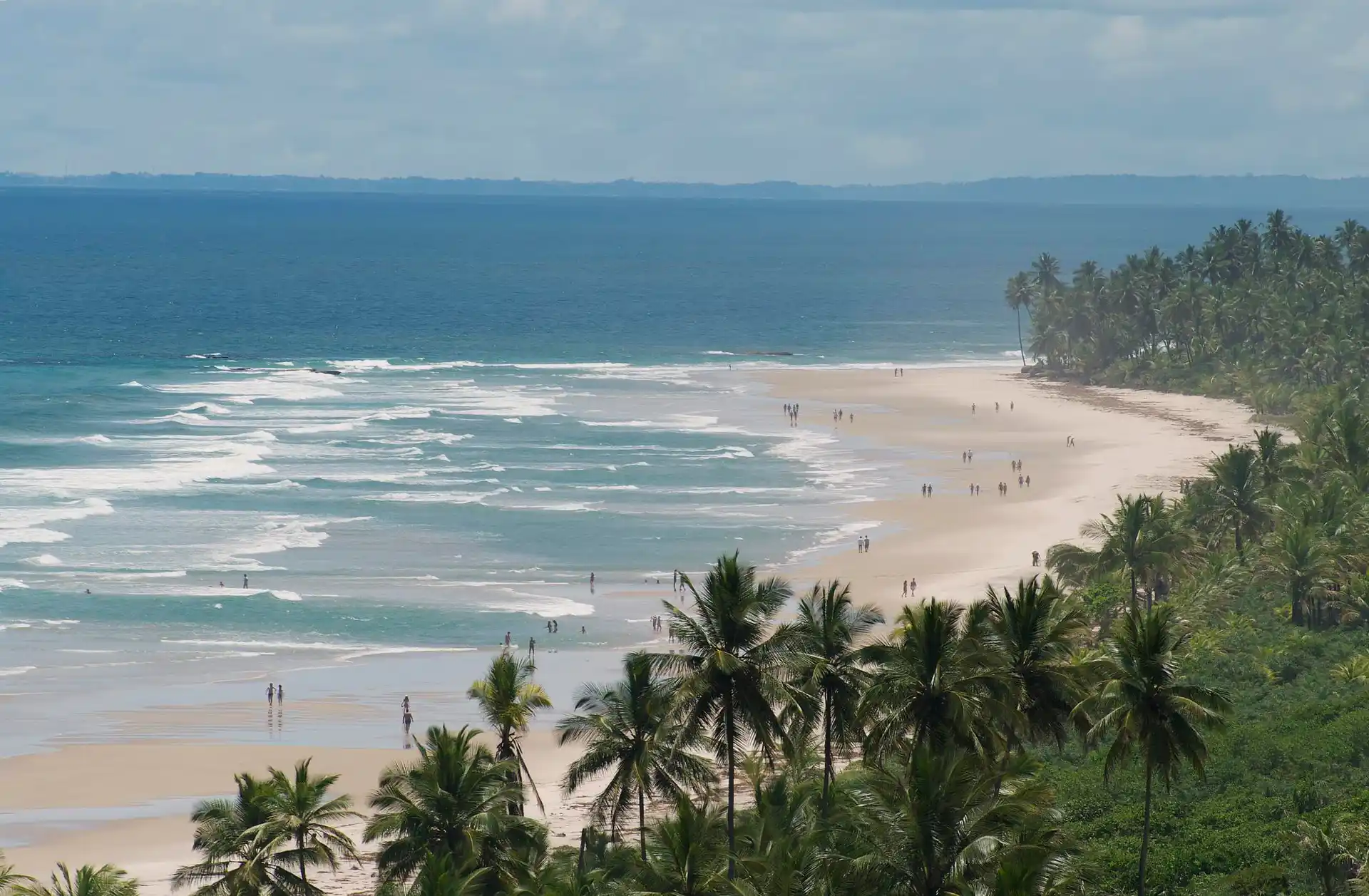
Photo: Otávio Nogueira, CC BY 2.0 Itacarezinho
Pale sand, coconut palms and a green sea with waves, about 14 km south of the village. It has a restaurant and parking on the beach, and you can spend the whole day without leaving it.
- Camboinha Between Havaizinho and Itacarezinho. The path linking the four beaches starts here.
- Jeribucaçu A river comes down through the forest and meets the sea on the sand itself. The path is confusing in places: go with a guide.
Eight breaks on a short stretch of coast
The season runs from May to September, with the east and south-east swells, and it falls in the village’s low season. Tiririca breaks almost all year, so no trip here is a total gamble.
- Tiririca Almost all year. The busiest, with cross currents.
- Engenhoca Summer, with a north-east wind. Long wave, easy paddle, all levels.
- Itacarezinho Best with no wind. Ten kilometres of beach, several sand-bottom peaks.
- Jeribucaçu Winter, three to four feet. Empty most of the year.
- Prainha Left in summer, right in winter. Advanced.
- Pontal South swell, May to September. No channel.
- Corais Clean east swell, at low tide. Coral bottom, advanced.
- Boca da Barra The river-mouth wave, one of the fullest and longest here.
The surf itinerary has what each break needs in wind, tide and level
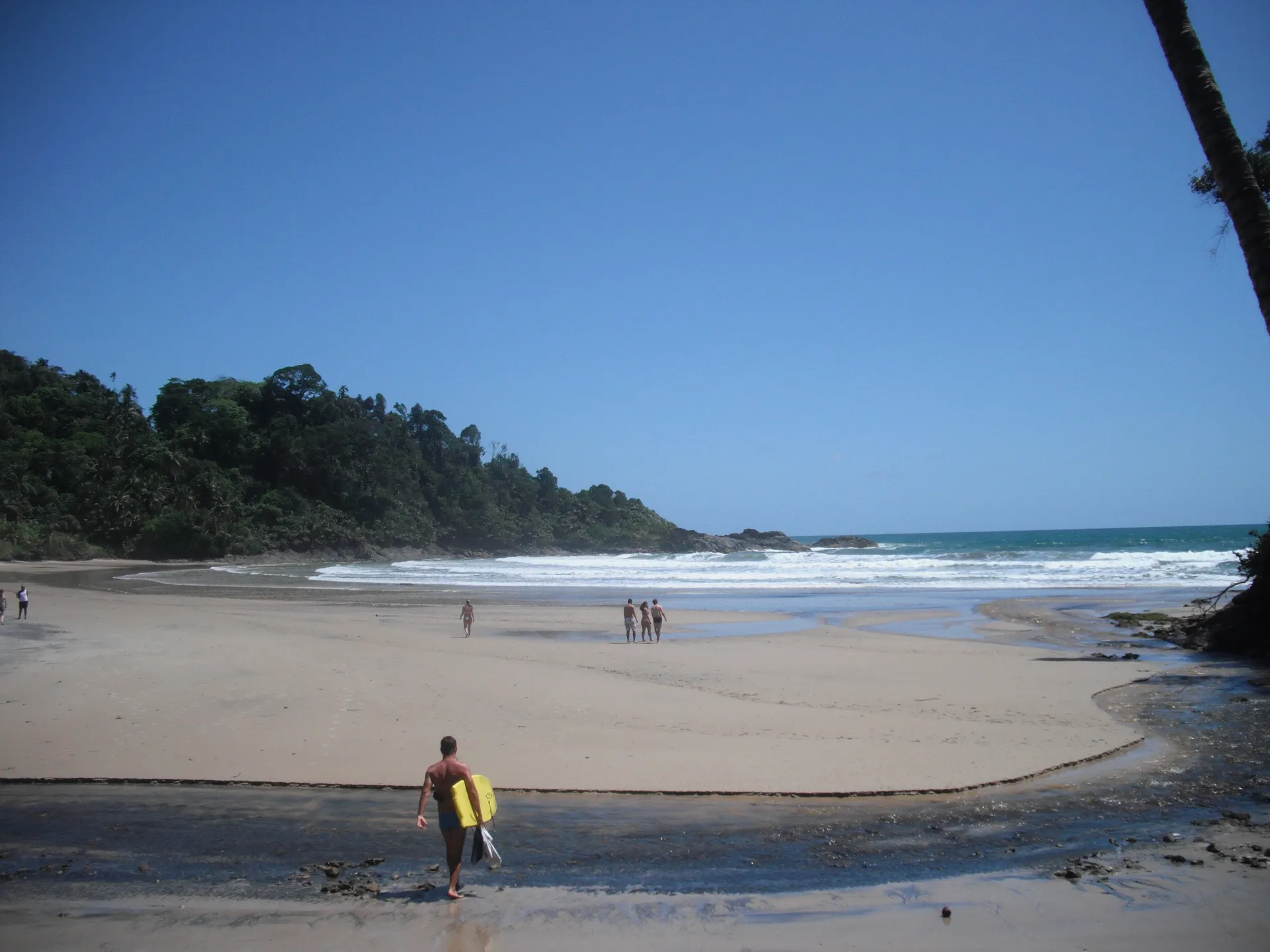
Fresh water, a short drive away
-
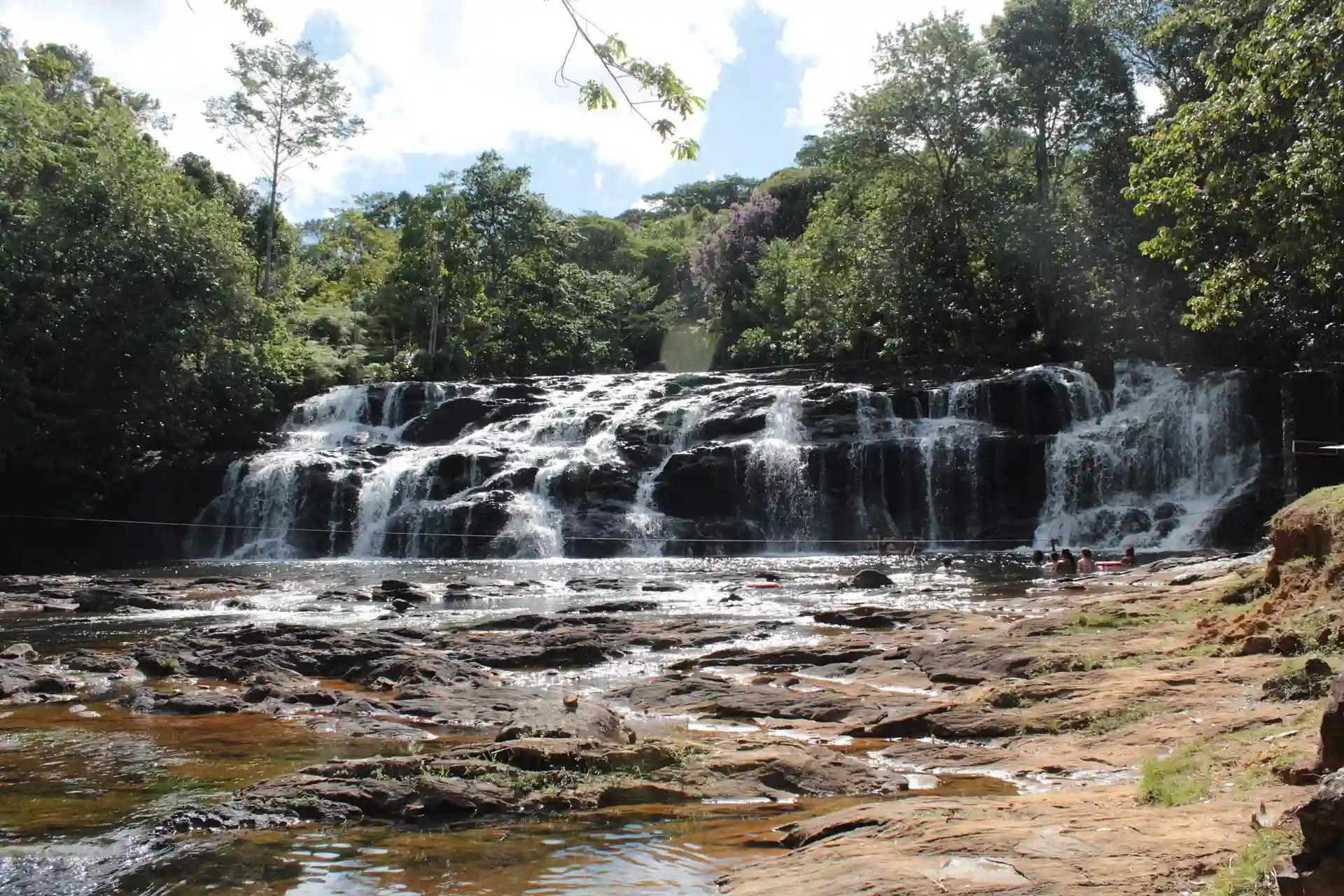
Photo: Marinelson Almeida, CC BY 2.0 Tijuípe waterfall
On the BA-001, towards Serra Grande. A short, easy path to a fall about four metres high and fifteen wide, with a pool for swimming. It is on private land, with an entrance fee and a restaurant.
-
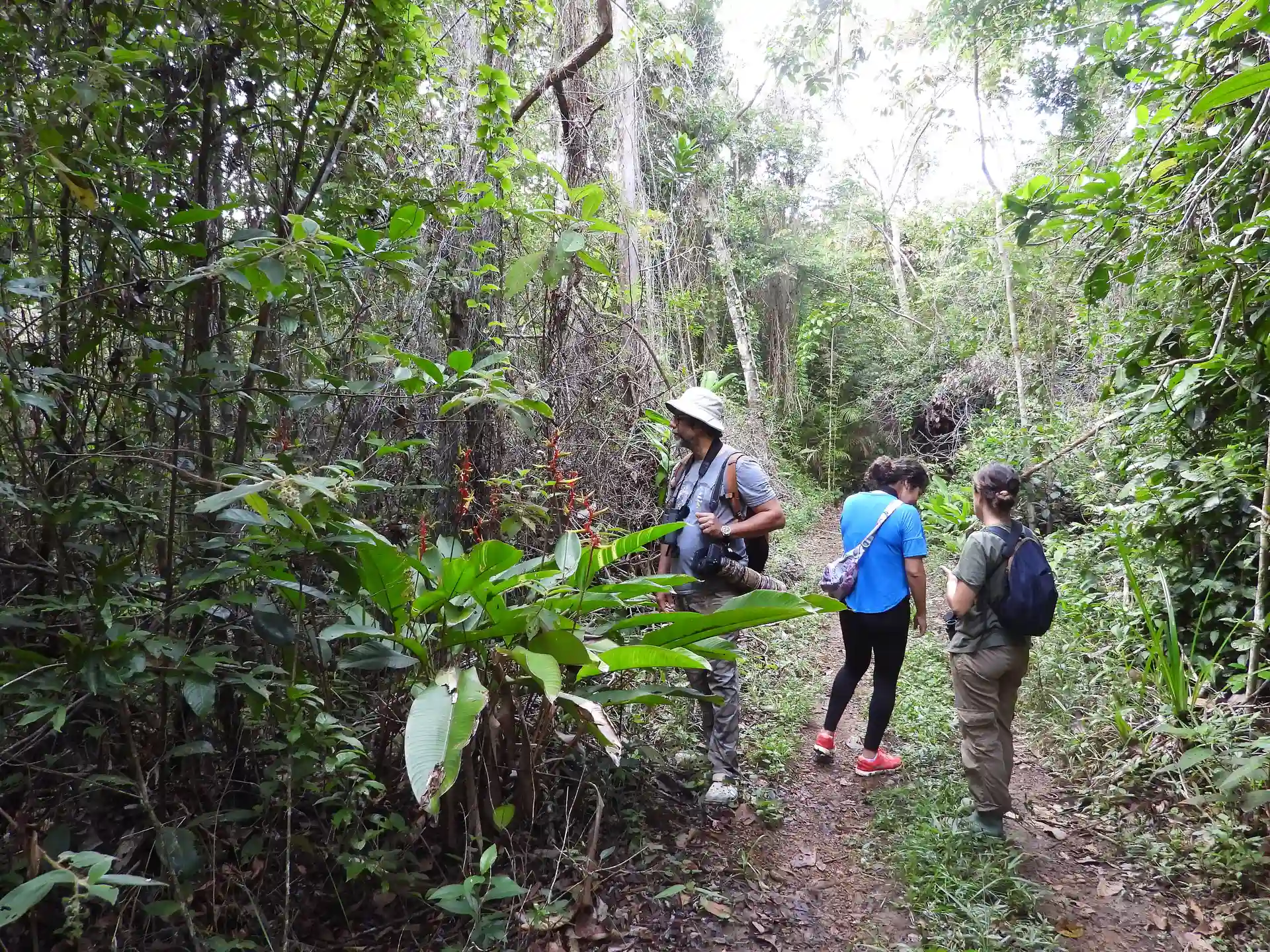
Photo: Leo Janicsek, CC BY-SA 4.0 Serra do Conduru
The state park covers 9,275 hectares and has one of the highest tree diversities ever measured on the planet. The Tijuípe and Água Vermelha rivers cross it, with stretches for swimming.
- Usina waterfall Fifteen minutes’ easy walk through the forest to a natural pool. The same path carries on through mangrove to Jeribucaçu.
- Cleandro waterfall Twenty-six metres in three drops, inside a cocoa farm. You get there by boat.
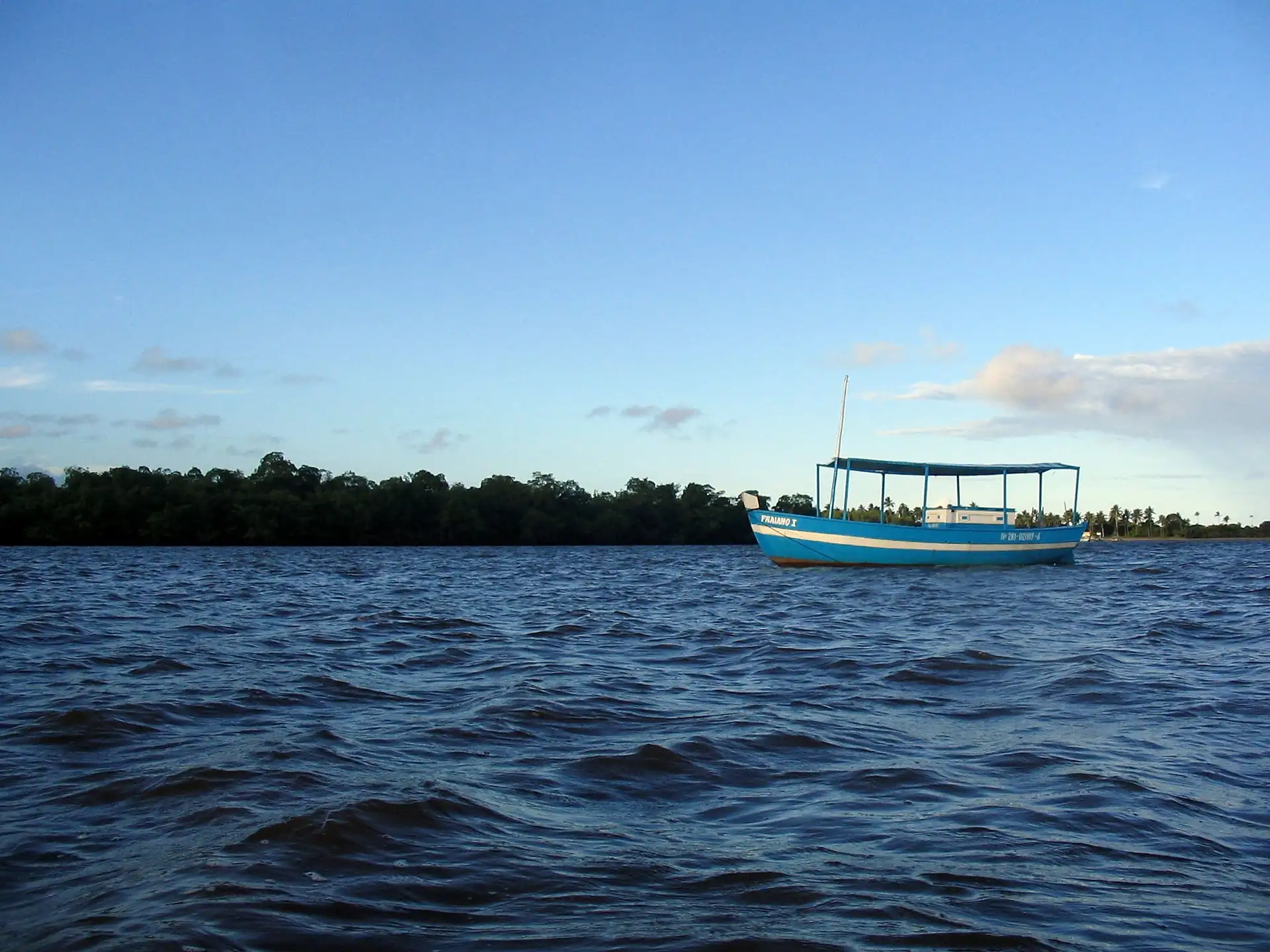
Inside the Contas river
You go up the river by small motorboat or canoe, into the mangrove, home to crabs and egrets. This is the river the farms used to bring the harvest down to the village. At the mouth is Pontal beach, where the boats go to watch the sunset. Reception arranges the trip.
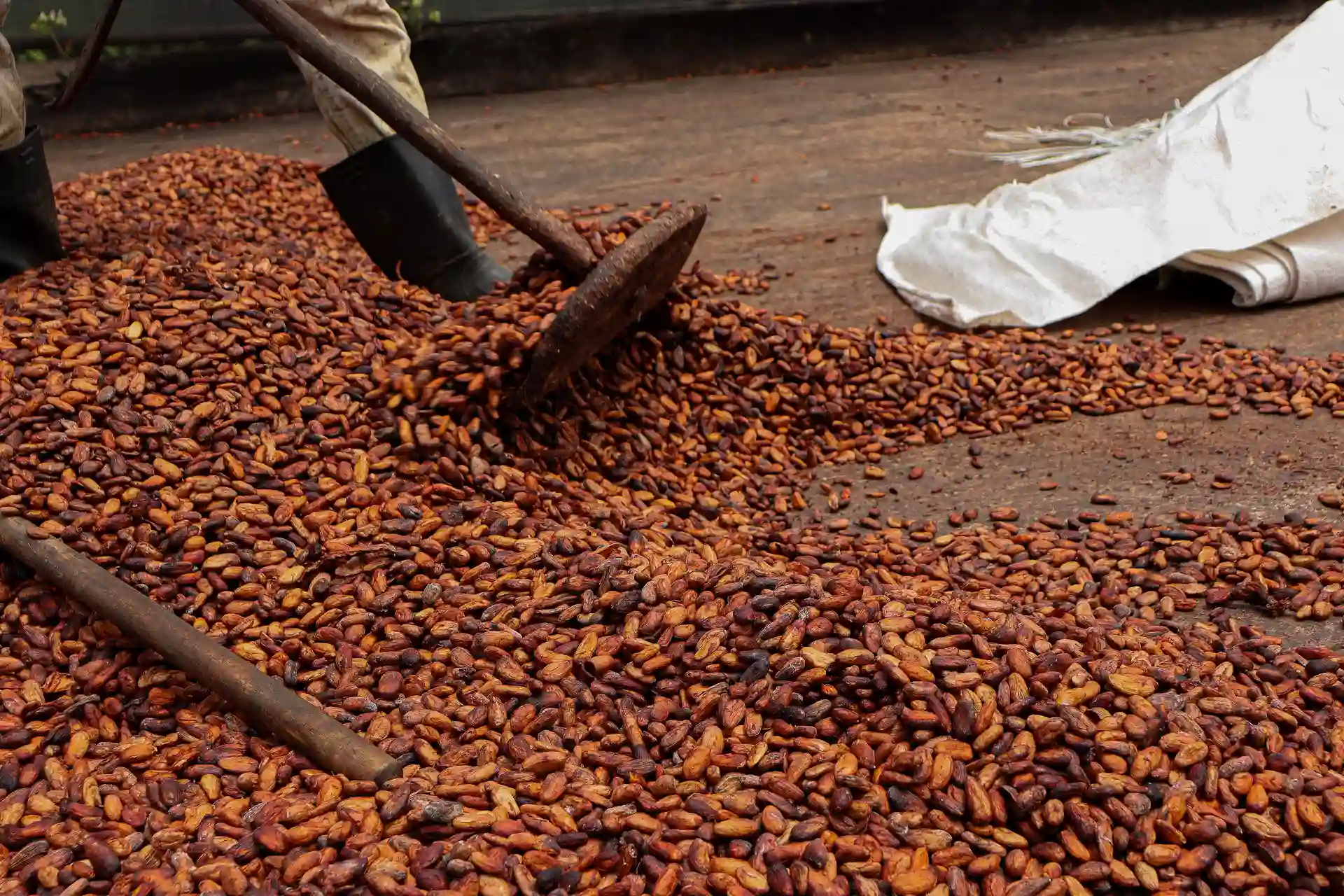
Cocoa, on the Taboquinhas road
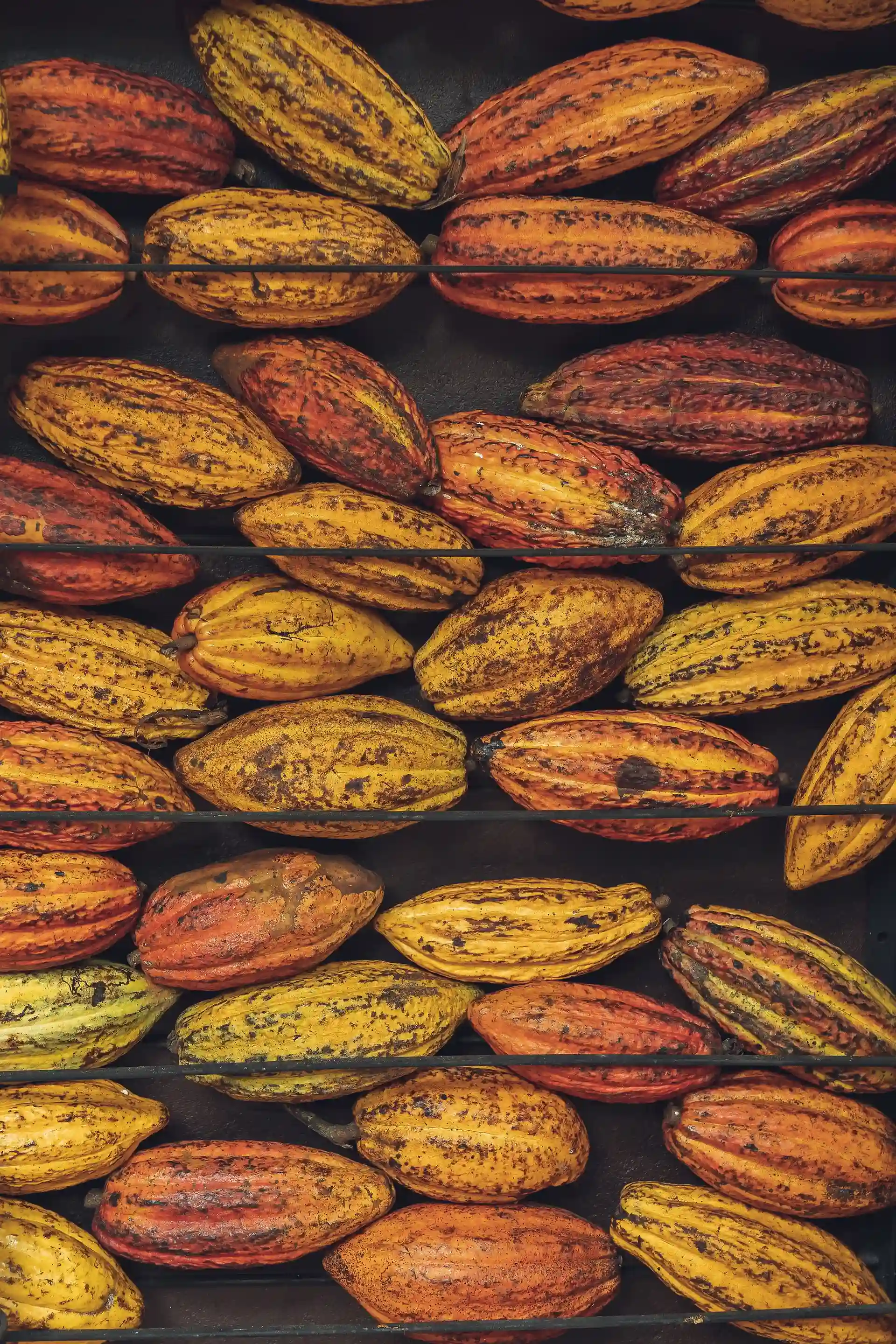
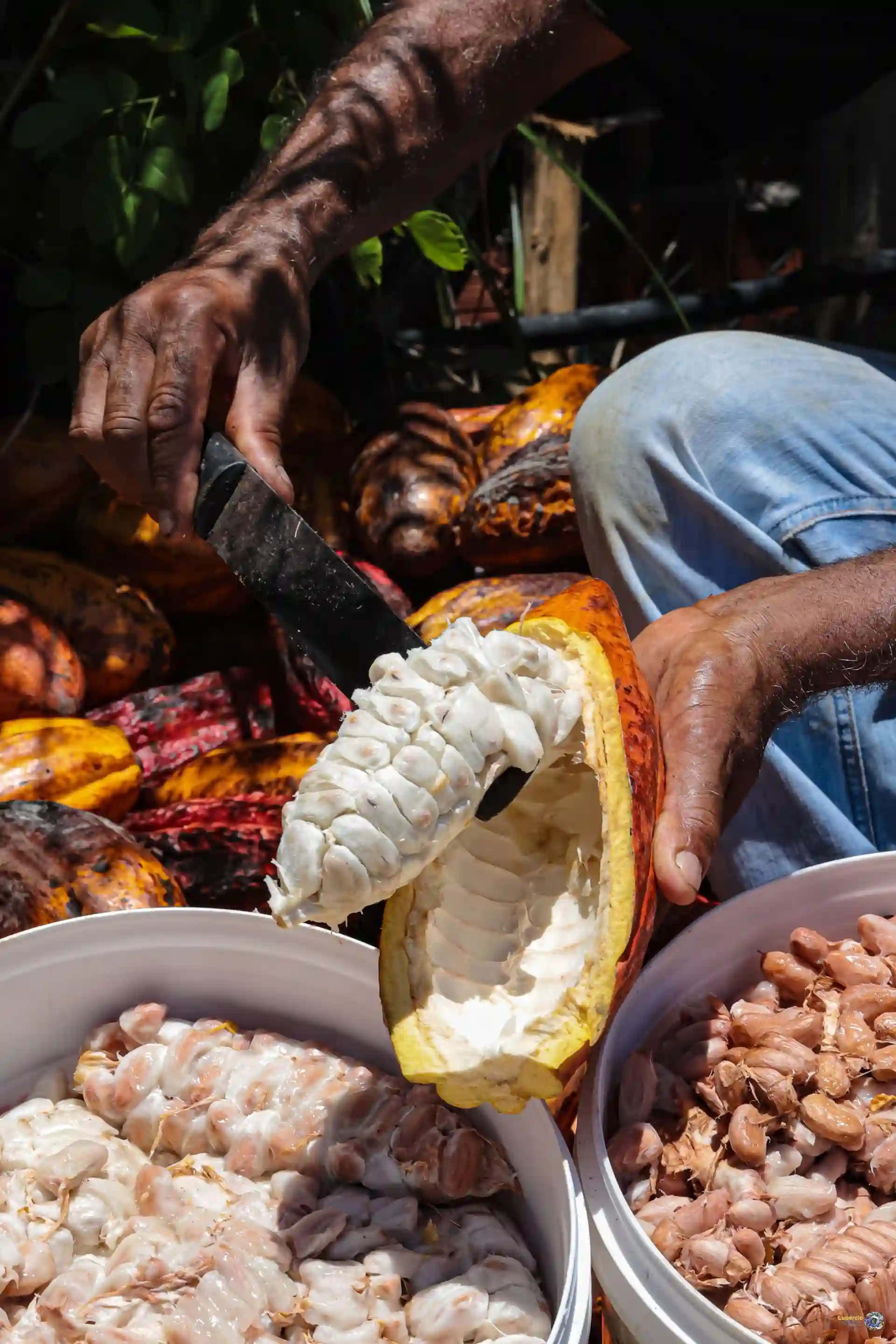
Cocoa on this coast grows in the cabruca, in the shade of the Atlantic Forest, which is why the forest is still standing here. About half an hour away by car, on the Taboquinhas road, farms take visitors and show the fruit becoming a bar: fermentation in wooden boxes, drying in the sun and a tasting. Each farm has its own day, and reception books the visit with a local guide.
Across the bay, a full day
The Maraú Peninsula has the natural pools of Taipus de Fora, which only appear at low tide, and the schooner goes round the islands of Camamu Bay. By speedboat, the crossing to Barra Grande takes half an hour; by car, about two hours, much of it on dirt road.
With small children
Concha and Ribeira are sheltered, and Concha is a cove where the sea barely breaks, good for swimming, paddleboards and kayaks. At low tide, Resende, Engenhoca and Havaizinho form rock pools for children who do not swim well yet. The Usina waterfall is a fifteen-minute walk that children manage on their own, and Engenhoca has a kiosk with food.
When is the best time to visit Itacaré?
For settled weather, heat without the summer peak and few people, September to November. December to February is the hottest and the busiest. Rain falls mostly from April to July, the surf season runs from May to September, and no month is cold.
-
December to February
25–32 °C The hottest and sunniest, and also the busiest and most expensive. New Year, Carnival and school holidays with almost no gap. Book months ahead. -
March to May
23–30 °C The heat stays and the rain starts to show. Fewer people, and the forest at its greenest. -
June to August
22–27 °C The mildest season, with frequent rain until July and a rougher sea, which is what surfers want. July fills with school holidays; June and August are empty. Evenings may call for a light jacket. -
September to November
Settled weather Heat without the summer peak, few people and better prices. It is the season reception recommends to anyone who asks.
Rain is concentrated from April to July and comes in short bursts: it rains for an hour and clears.
Getting here
From Ilhéus. Jorge Amado airport is about 70 km away on the BA-001, an hour and a half to two hours by car. The road is paved and in poor condition: allow for the longer time. Booked with your stay, the hotel transfer waits in the arrivals hall.
From Salvador. About 388 km, some six hours by road, or the ferry to Bom Despacho on Itaparica Island and then the BA-001. Most people prefer to fly to Ilhéus.
By bus. The bus to Itacaré leaves from the Ilhéus bus station, not from the airport.
Three ready-made itineraries
Put together by reception, day by day, for three different trips.
-
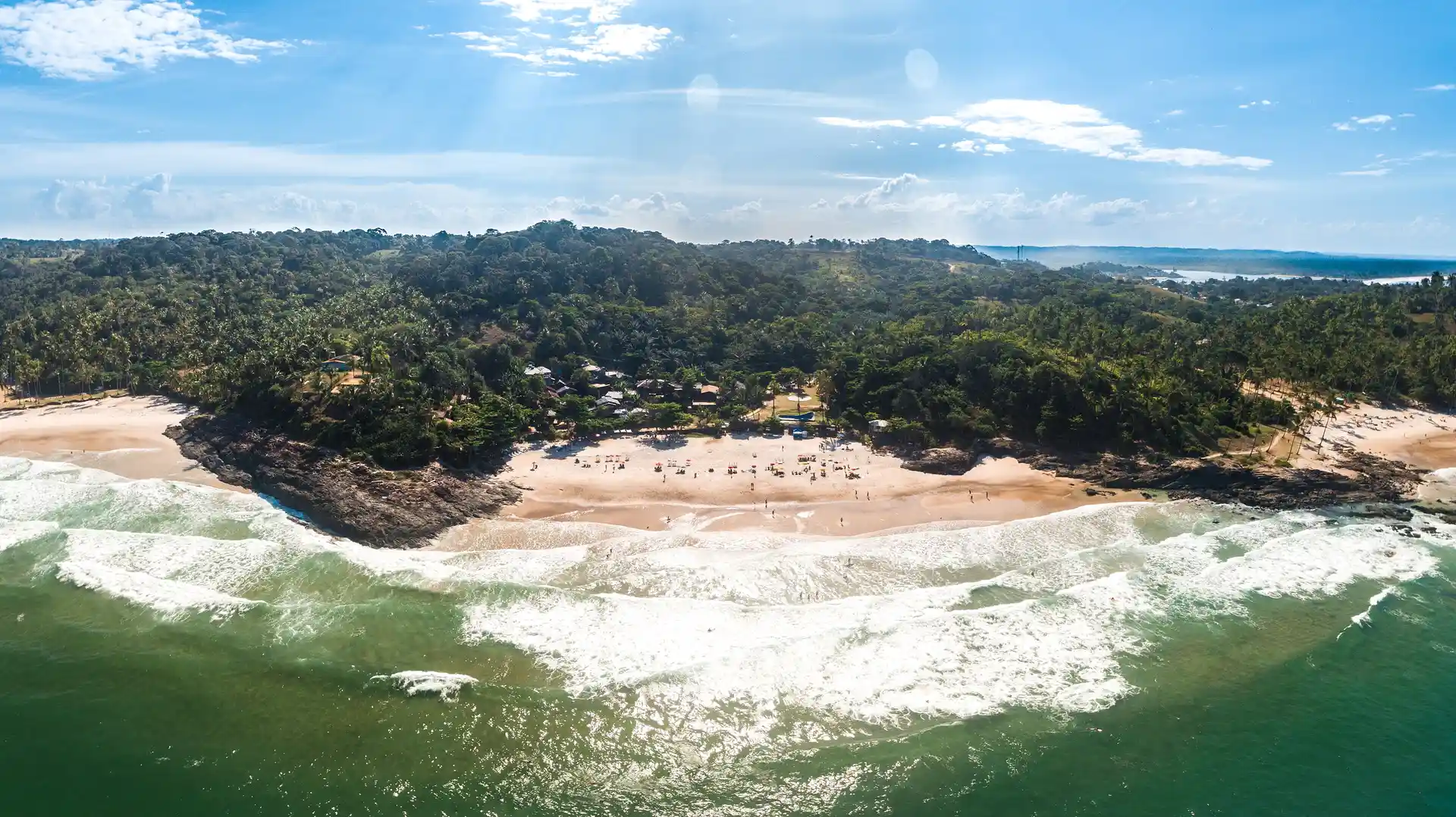
Five days, five breaks
Tiririca, Engenhoca, Itacarezinho, Jeribucaçu or Prainha, and back to whatever is working.
See the itinerary
-
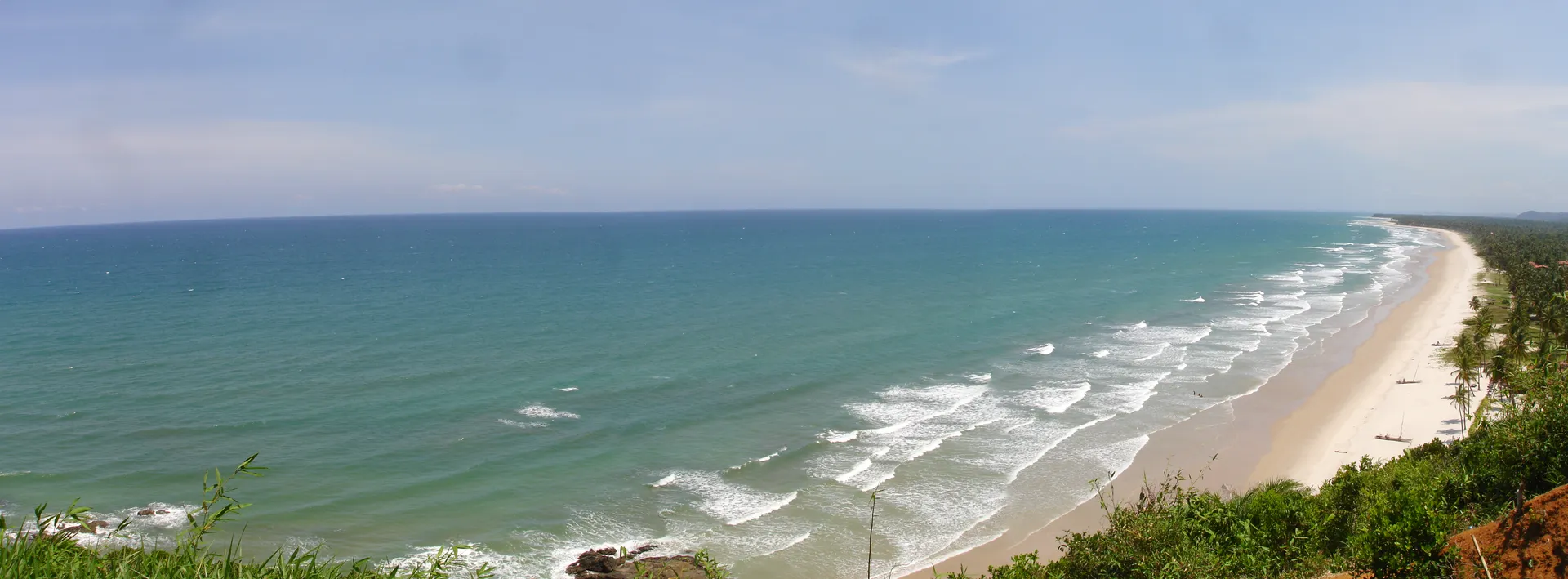
Four days, unhurried
One thing a day and the afternoon back up the hill: Concha, Itacarezinho, a waterfall and the cocoa.
See the itinerary
-
Three days, inside a longer trip
For travellers arriving from Ilhéus with three nights: the village and the coast, the cabruca, and the forest or the river.
See the itinerary
From the high ground, all of this is a few minutes’ drive
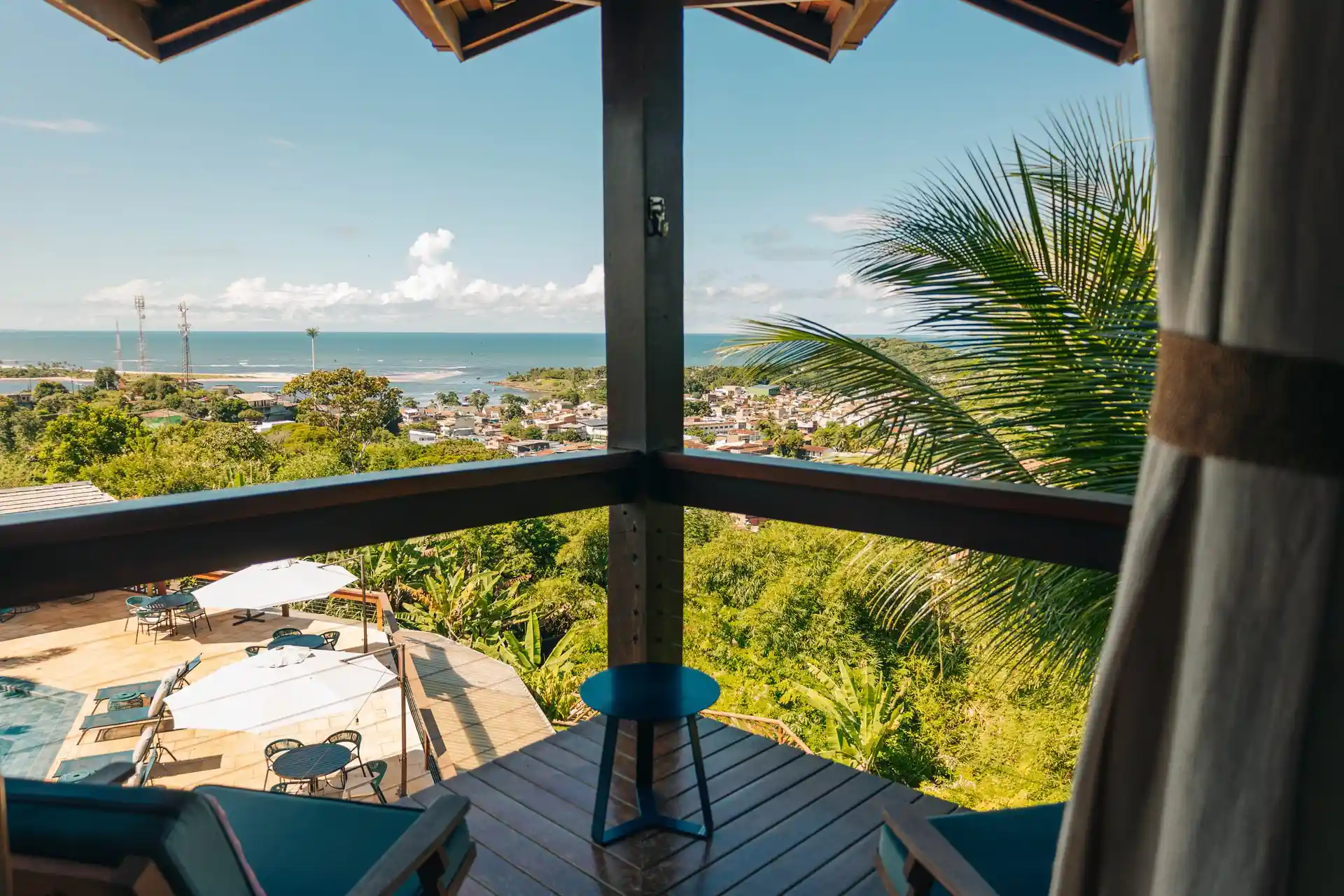
Chocolate Hotel sits on the high ground at the entrance to the village. The centre and Coroinha are five minutes away by car; Resende, Tiririca and Costa, seven; Concha, 1.8 km. Walking is not an option: the climb is long and the last stretch is a dirt road with no pavement. For the southern beaches and the waterfalls, reception arranges the transfer.
- 1.8 km to Concha beach
- 7 min by car to the surf beaches
- 70 km from Ilhéus airport